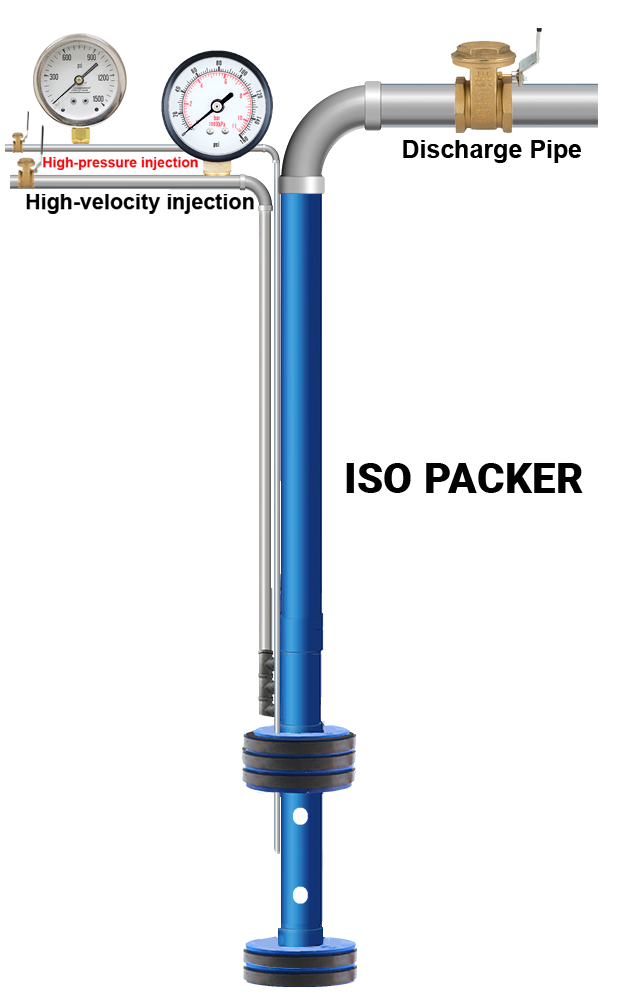
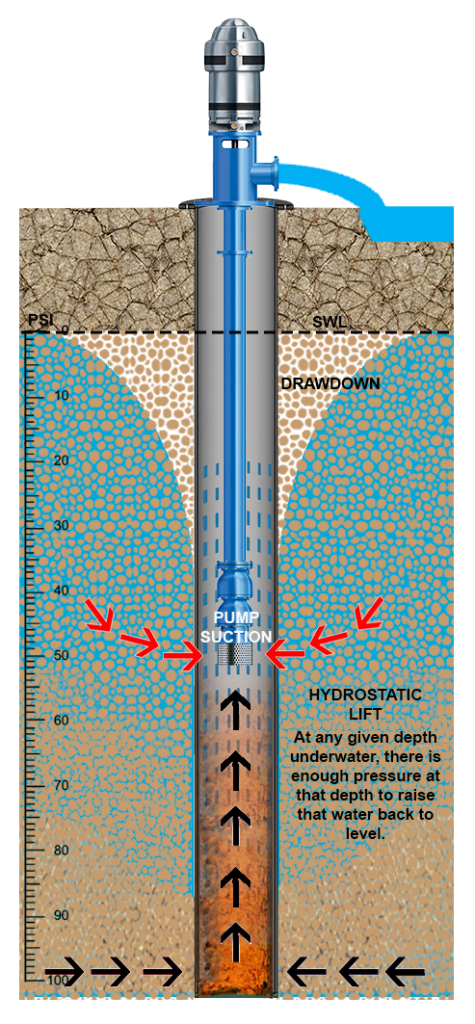
Hydrostatic lift fills a well from the bottom up. Pump suction drains a well from the top down. It is deep-well-cleaning that keep a pump from draining the life out of a well.
Well Cleaning
In newly constructed wells, well-cleaning is referred to as well-development because it removes drilling mud and unwanted solids to create a larger flow in area. In aging wells, cleaning is known as well rehabilitation, because it is done to return a well back to its most efficient water yielding state. |
Incrustation and Plugging
Both incrustation and plugging obstruct water flow from the deepest entrances and work their way up as a well ages. Incrustation is mineralization that forms inside a well and plugging is sediment that collects outside. The issue is they both contribute to reduced deep water efficiency while simultaneously increasing the speed of the upper water. This accelerates wear and tear, reducing the useful life of a well. |
Importance of Deep Water
Hydrostatic head created by water drawdown is what lifts deep water up inside the well. It is the lower-pressure differential between inside and outside water. It takes no more effort to lift water from 1,000 feet below a pump than to drain it down from 2 feet above. Put simply the deeper the water below the well static water level (SWL) the more water a well can yield for pumping effort. |
Identifying Problems
The dilemma is whatever happens at one end of the well is usually caused by something occurring at the other end. A pump breaking suction is not a draining problem; it is a filling problem. Cleaning the upper well makes it drain more water. The proper solution is to clean the deep well, allowing the well to fill itself with the more abundant deep water. |